
Galleries
The rooms you walk through
The entry ticket includes all of this: the hanging obelisk, the Grand Hall, the stairs, twelve galleries, Tutankhamun, and Khufu’s boats. The collections run from prehistoric Egypt through the Roman period.
01
Hanging obelisk
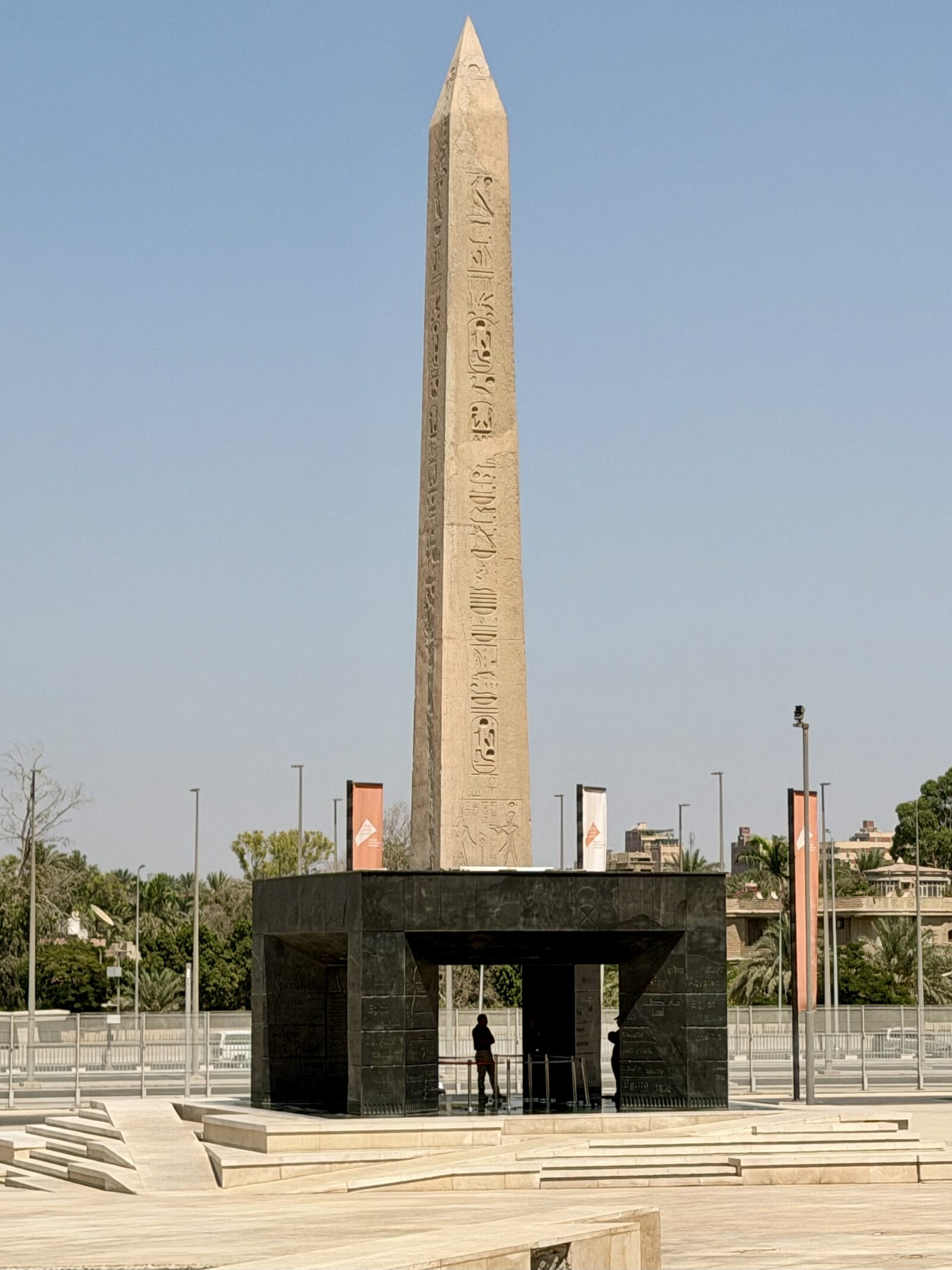
Before you go in, a granite obelisk of Ramesses II from Tanis stands raised off the plaza, about sixteen metres high, so his names on the underside of the base can be read from below. The gardens and the approach are part of the same ticket as the galleries. If your window is later in the day, they are a good place to wait.
Obelisk of Ramesses II
This granite obelisk of Ramesses II was brought from Tanis, ancient San el-Hagar. It is the first object on the approach, raised over a plaza of about 30,000 square metres in front of the entrance — the first Egyptian obelisk displayed off the ground — so the royal names on the underside of the base can be read from below.
02
Grand Hall
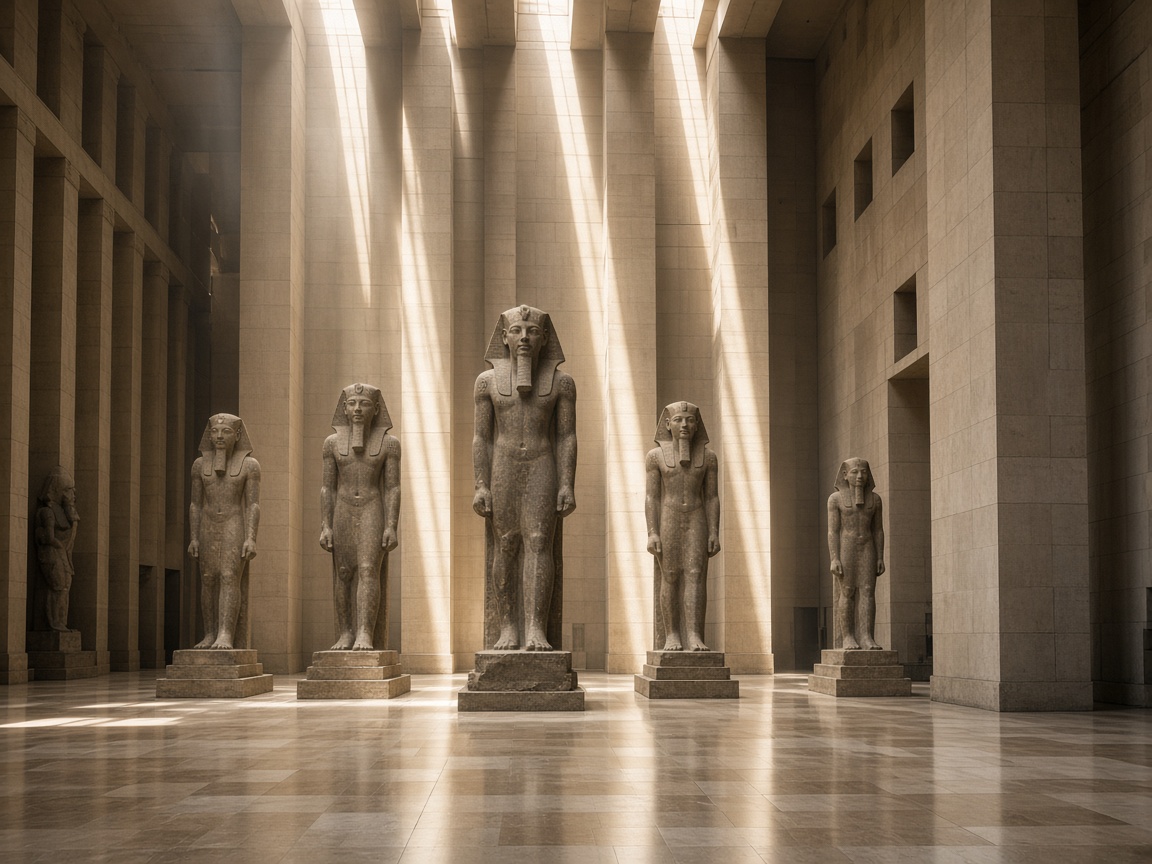
The visit begins here, in a stone hall open to the light. The colossal statue of Ramesses II stands at its centre, about eleven metres of red granite and some 83 tonnes. Around him are the victory column of his son Merneptah, a Ptolemaic king and queen raised from the sea at Heracleion, statues of Senusret I, and the king list from Saqqara. Pause before you climb. The rest of the museum starts from this room.
Colossal statue of Ramesses II
The red-granite figure of Ramesses II holds the centre of the hall, about eleven metres high and some 83 tonnes. Work on this scale honoured a ruler treated as divine, and these statues may also have been understood as a link between people and the gods.
Column of Merneptah
A column of his son Merneptah stands with him, carved to record a victory.
Colossus of a Ptolemaic king
A colossal statue of a Ptolemaic king was raised from the sea at Heracleion and stands in the same hall.
Colossus of a Ptolemaic queen
The queen’s colossus comes from the same underwater site and is shown beside the king.
03
Grand Stairs
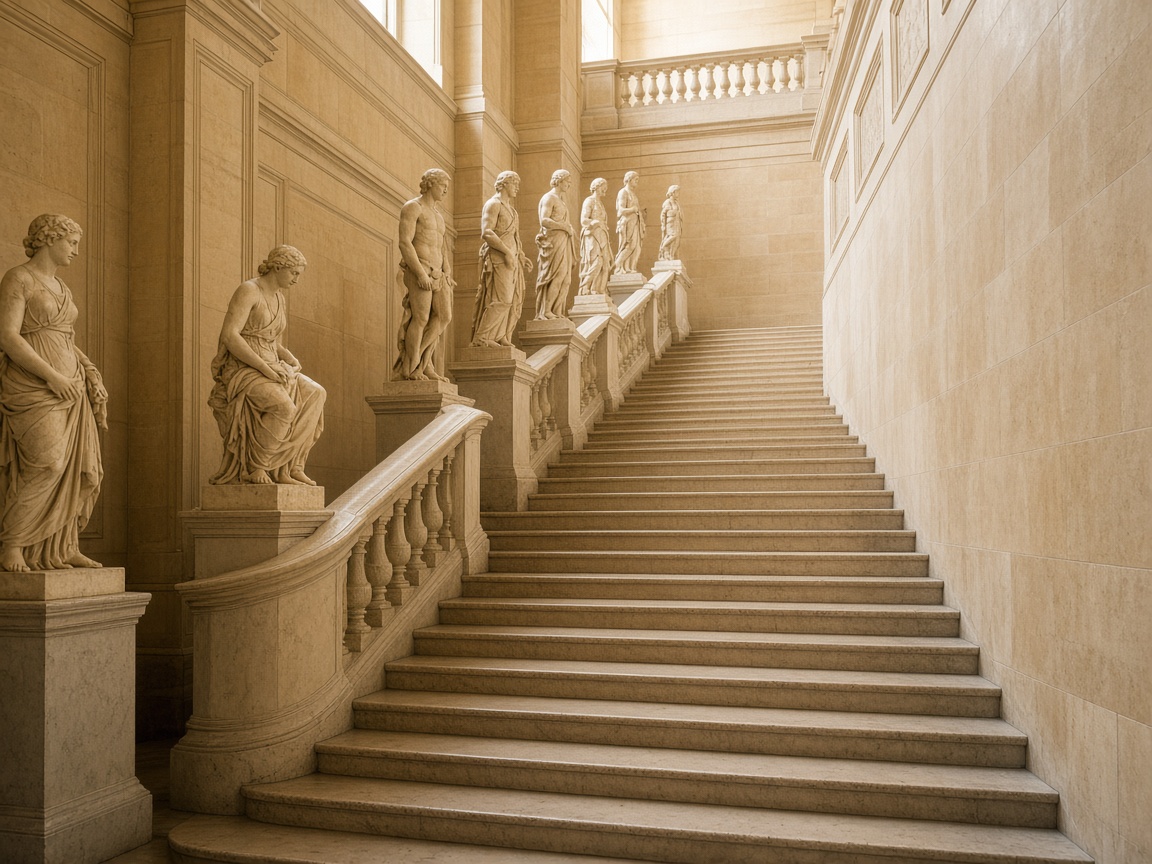
The stairs are part of the visit, not only a way to the next floor. Nearly sixty statues, stelae, columns, and sarcophagi are set along the ascent, grouped as the royal image, the temples, the gods, and the journey to eternity. At the top, a wall of glass frames the three pyramids of Giza. There is a lift if you would rather not climb.
Royal image
Kings and queens are carved at a scale meant to last. Their statues along the climb present royal authority as something solid and public.
Divine houses
Building temples and keeping them in repair was one of a king’s chief duties. Looking after the gods was tied to keeping the world in order. Pieces of temple architecture — columns, capitals, and related stonework — are set on the stairs.
Gods and kings
The king was understood as the gods’ representative on earth. Statues here place rulers and deities together, an exchange that was meant to continue.
Journey to eternity
Death was treated as a passage. Sarcophagi and other burial pieces on the stairs show what was prepared so the dead could make that journey.
04
Main galleries
Twelve galleries cover life along the Nile from prehistory to 394 AD. You can walk them in time — the Old Kingdom, the Middle Kingdom, the New Kingdom, then Egypt under the later dynasties and Rome — or follow three themes that run the length of the floor: Society, Kingship, and Beliefs. The rooms hold palettes and early writing, tomb statues, jewelry, models of workshops and houses, royal sculpture, and the gods with their sacred animals. Smaller rooms downstairs look at particular places, among them the Valley of the Kings, the workers’ village at Deir el-Medina, and the sunken cities of Abu Qir Bay.
Society
One path follows people beyond the throne: the range of lives along the Nile, through objects they made and used, from jewelry and mirrors to models of workshops and houses.
Kingship
A second path follows how kingship began, what queens did, and how a royal household worked. The objects run from prehistory to the Roman period.
Beliefs
A third path treats religion as something that ran through daily life and changed over centuries. Gods, sacred animals, coffins, and the tools of the afterlife sit on this line.
05
Tutankhamun galleries
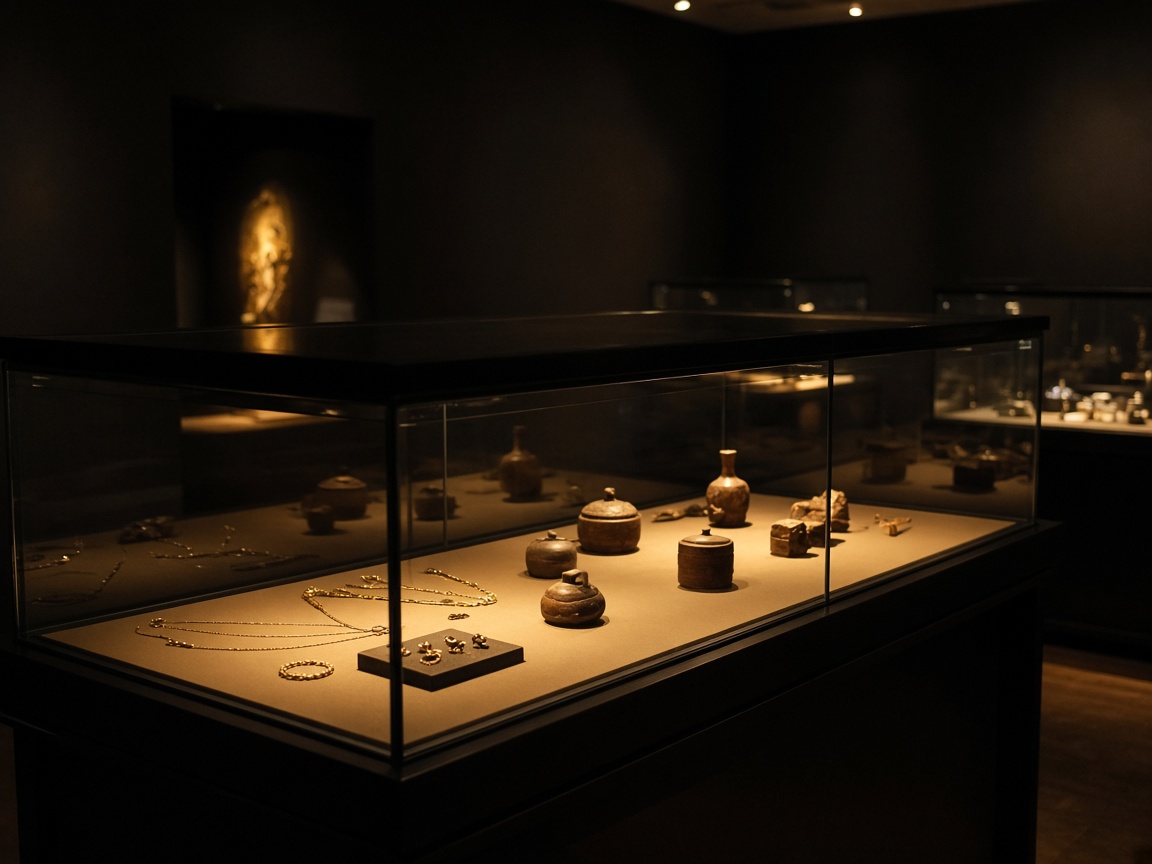
The objects buried with Tutankhamun are shown together here for the first time: more than five thousand of them, in two long galleries. One follows his life at court, with the golden throne, the chariots, the beds, and the jewelry. The other holds the burial itself — the nested shrines, the three coffins, the canopic shrine, and the gold mask. His mummy remains in the Valley of the Kings. Allow real time. This is the heart of the day for most visitors.
Discovery
The rooms begin with the find of 1922. Howard Carter and his team, working with the support of Lord Carnarvon, cleared the tomb, and the objects from that work are what fill these galleries.
Identity
Another stretch asks who Tutankhamun was: his family, and what study of the evidence suggests about his death. He became king as a child and died in his late teens.
Funeral
The burial equipment is gathered in one sequence: the nested shrines, three coffins, the canopic shrine, and the gold mask, made to protect his body and carry him into the next life. His mummy remains in the Valley of the Kings.
Lifestyle
Other objects were for living at court: the golden throne, chariots, beds, jewelry, and smaller pieces of daily use.
Rebirth
Furniture and provisions placed in the tomb were meant to supply him after death, so that life could go on.
06
Khufu’s boats
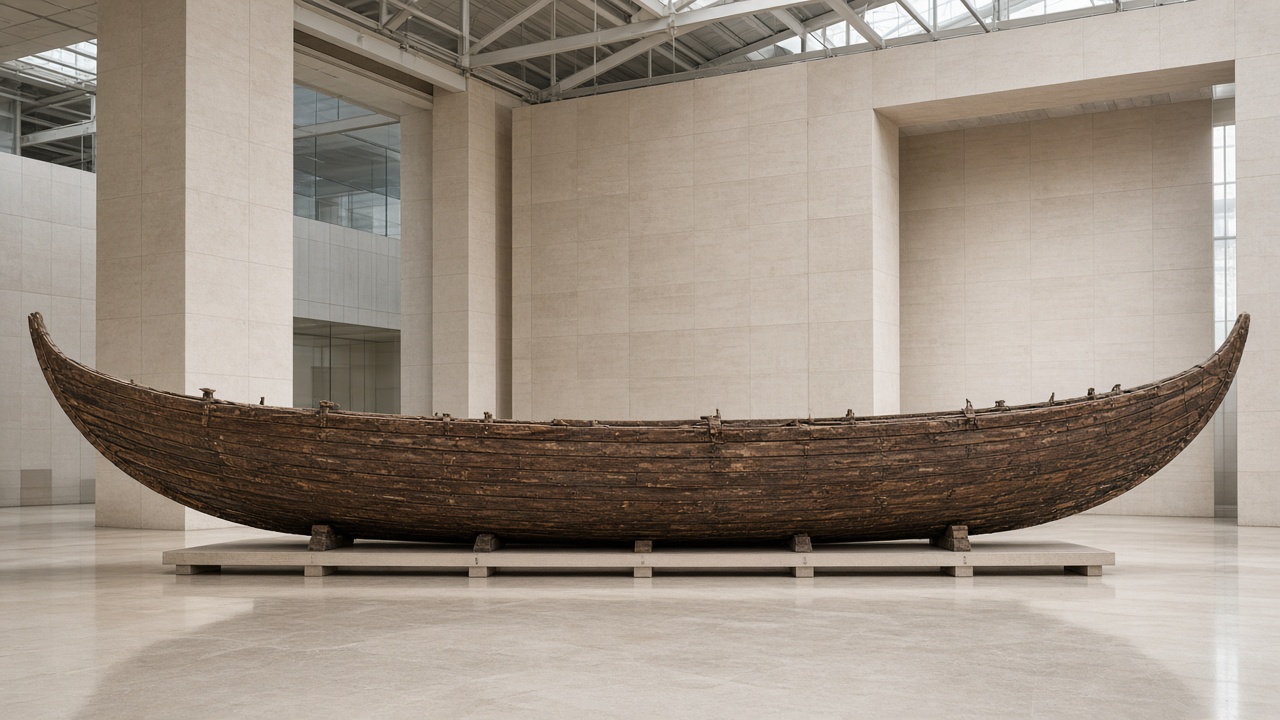
Khufu’s boats have their own building, a short walk across the plaza, and they are included in the same ticket. The first was found in pieces beside the Great Pyramid in 1954. It is cedar, 42.32 metres long, and it stands whole again here. The second is conserved where you can see the work. Go before you leave the grounds. Once you exit, the ticket does not bring you back in.
The first boat
Khufu’s pyramid complex has five boat pits. Three of them, found empty, lie outside the mortuary temple and to the north of the causeway. In 1954, clearing the south side of the Great Pyramid uncovered two sealed pits with the boats taken apart. The first had been buried under limestone blocks. Reassembly took more than ten years. The hull is cedar and measures 42.32 metres. Plans to move it go back to the 1970s, but taking it apart again was judged too risky. In August 2021 it travelled whole: three days, about eight kilometres, then a crane into this building, after a steel frame, conservation work, and trial runs.
The second boat
Lifting the timbers of the second boat began in 2014. Those pieces are now in the same building, and the conservation and rebuilding are part of what you can watch. The two boats are among the oldest wooden craft known. Their purpose is still argued: boats for the funeral, or boats for Khufu’s voyage with the sun god Re. Both are on the same ticket. See them before you leave the grounds.